
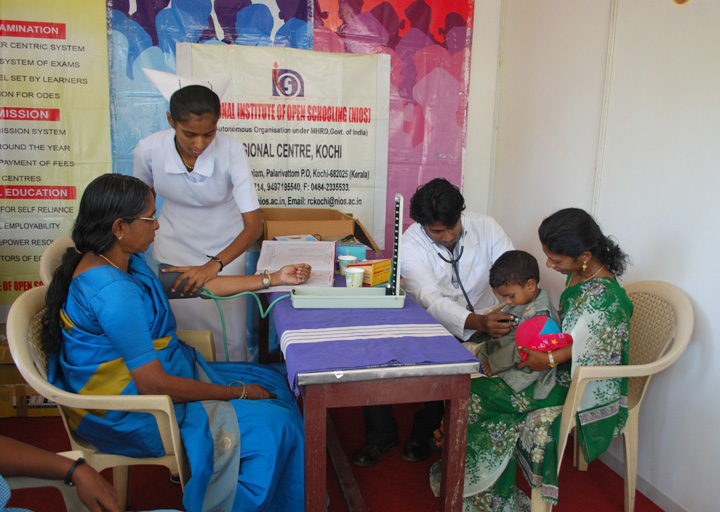
Instead of a thrust on key areas such as women and children’s health, the government has chosen to expand tertiary healthcare. India’s Budget 2026–27 was presented on February 1 with much celebration and described as a transformative step toward inclusive growth. Finance Minister Nirmala Sitharaman reiterated the government’s commitment to ensuring access to resources and opportunities for every family and community. Health sector allocations were highlighted as a sign of social development. Yet, a closer reading reveals a troubling gap: primary healthcare—the foundation of any public health system—remains neglected. The…
Posts published in “India”
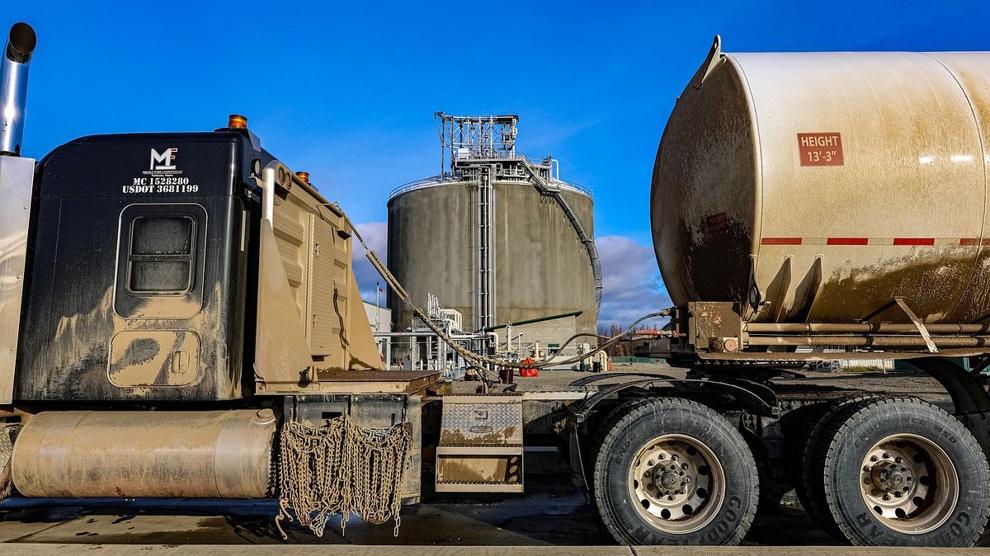
U.S. and global oil and gas prices surged higher Monday as concerns grew that attacks by Israel and the U.S. on Iran could spiral into a broader war and disrupt global energy supplies. The U.S. and Israel launched strikes on Iran on Saturday that killed Supreme Leader Ayatollah Ali Khamenei and dozens of other senior government officials while talks between Washington and Tehran over the Islamic Republic’s nuclear program were reported to be ongoing. European benchmark Brent crude oil surged by as much as 13% in early trade on Monday,…

Tesla officially entered India in July 2025 and registered 243 cars in the country by 31 January 2026. Around 206 registrations occurred in 2025, while January 2026 saw 37. Maharashtra accounts for more than half of all Tesla registrations, followed by Delhi and Gujarat. Registrations peaked in September 2025 during the initial launch phase and then stabilised in later months. The numbers show that Tesla’s entry into India is still in a very early stage, concentrated mainly in large metro cities with higher-income buyers and stronger EV infrastructure. ContextElectric vehicles…

India’s economy grew steadily in 2025, with real GDP expanding close to 7 per cent despite global trade tensions. Growth has been broad-based, driven by rural consumption, government expenditure, resilient exports and modernisation across services and infrastructure. Looking ahead, sustainability will depend on continued progress in infrastructure modernisation, while carefully managing debt, the energy transition, trade diversification and poverty reduction. With these challenges effectively addressed, India is well positioned to maintain its strong growth momentum. India’s economy grew at a steady pace in 2025 despite a global climate of sluggish…

On February 6, the U.S. and India announced that they have reached a framework for an interim reciprocal trade agreement which lists tariff reductions on several products traded between the two countries. However, the announcement has raised concern among farmer groups and food security activists over potential increases in agricultural imports, including genetically modified (GM) grain. The India-U.S. joint statement says, “India will eliminate or reduce tariffs on all U.S. industrial goods and a wide range of U.S. food and agricultural products, including dried distillers’ grains (DDGs), red sorghum for…

US-India trade negotiations have shown how domestic tariff policy has become inseparable from foreign policy. India must recalibrate its tariff framework from a protectionist, reactive shield, to a strategic tool. The White House’s latest announcement on finalising the Indo-US deal, and lowering of tariffs from 25 to 18 percent for India has once again brought to the fore the complex geopolitics of trade negotiations. The exchange between the US and India over the past year proves that modern trade negotiations extend beyond tariff schedules. Sanction regimes and geopolitical alignment have…

Climate policy experts reflect on the agreement’s focus on “cooperation”, “dialogue” for environmental matters in lieu of binding targets. When India and the European Union finally concluded their long-pending Free Trade Agreement last week, leaders on both sides hailed it as a landmark moment for global commerce. European Commission President Ursula von der Leyen called it the “mother of all deals”, a thought echoed by Indian Prime Minister Narendra Modi. Some media outlets described it as one of the “biggest trade deals ever signed”. But while the deal’s trade aspects…

India and the European Union signed a trade agreement on January 27 that’s been projected as a major breakthrough “in a tumultuous time for global trade and supply-chain realignment,” as Commerce and Industry Minister Piyush Goyal described it. The free trade agreement aims to boost trade and investment between India and the European Union by reducing tariffs and trade barriers. The two major economies together account for about 25% of global GDP and nearly one-third of global trade. Both sides have presented the agreement as a win. India said in a…

Citizen science can help document Northeast’s rich biodiversity and ecological knowledge, while also ensuring community participation in environmental policymaking. “What does the colour of this butterfly’s wings tell you about its life?” My question travelled through the group of students. Curiosity is a skill, and I’d kept this in mind when I decided to initiate the first science walk in Dharmanagar, my home town, with a few of my students in 2024. The goal was straightforward—to engage the youth in understanding nature through curiosity. Each year in September, which is…

India’s mineral production has seen consistent growth over the past six years, led by strong performance in iron ore, bauxite, and limestone. The metallic minerals segment has driven much of the value increase, while non-metallic minerals have shown steady, demand-based expansion. Mineral production is a key driver of industrial growth and energy transition worldwide. As countries compete for critical resources to support manufacturing and clean technologies, reliable and sustainable mineral supply chains have become strategically important. Minerals such as iron ore, bauxite, and limestone form the foundation of global industries,…